
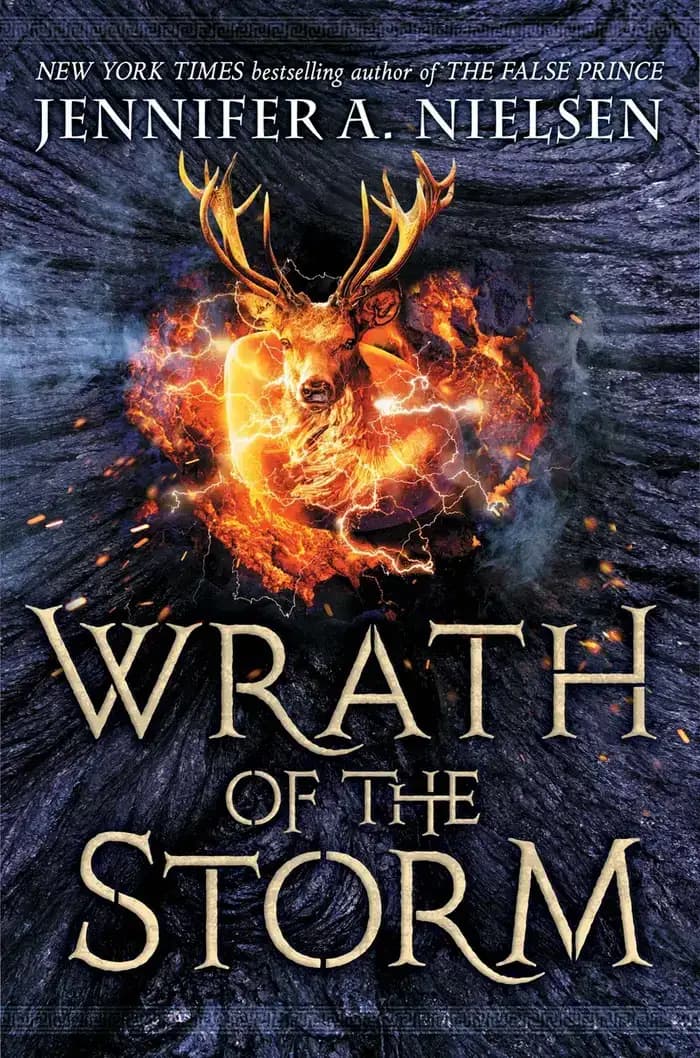
Wrath of the Storm: Mark of the Thief
#3 of 3 in Mark of the Thief Series
on Goodreads (4,638)
What’s inside...
Trouble has a way of finding Nicolas Calva, and it’s not likely to leave him alone any time soon. With Caesar’s magic bulla, the Malice of Mars, and the possibility of a Jupiter Stone in play, all the powers of Rome are circling Nic. He’ll have to maneuver his way through scheming government officials and reawakened magical beasts to save the Empire. Can he manage to keep his friends and family safe, claim his own freedom once and for all, and rescue the Empire—before the magic gets the better of him? With twists and turns on every page, critically acclaimed author Jennifer Nielsen weaves an epic, action-packed conclusion to her extraordinary Mark of the Thief trilogy.
Character compass
Nicholas Calva (Nic)
Livia
Aurelia
Crispus
Radulf
Discussion points
How do you think Nic's ability to control the power within the amulet affects his decisions and relationships throughout the story?
What lessons can we learn from Aurelia's loyalty and courage in the face of danger?
In what ways do the characters in the book demonstrate resilience when confronted with adversity?
How does the setting of ancient Rome influence the events and characters in the story?
What are some moral dilemmas faced by the characters, and how do they resolve them?
Tip: Role play these questions
Encourage your child to express their opinions about Nic’s choices throughout the book, making connections to their own life experiences.
Discuss the historical context of ancient Rome and how it adds depth to the story, perhaps referring to a map or encyclopedia for visual and factual support.
Explore the theme of power and responsibility by relating it to everyday situations your child might encounter, asking how they would handle similar responsibilities.
Use characters' moral dilemmas as a foundation for discussion on values and ethics, asking your child what they would do differently and why.
After reading, suggest drawing a scene from the book or writing a short story about an alternate ending to boost creativity and engagement.
Key lessons
Example Lesson: Courage in adversity
Explanation: Throughout 'Wrath of the Storm,' the protagonist faces numerous challenges and threats, and his courage to confront these situations head-on demonstrates the importance of bravery.
Real-World Application: Children learn that facing their fears, whether at school or in social situations, is crucial and can lead to personal growth and resolution of problems.
Example Lesson: Importance of loyalty
Explanation: The story emphasizes the power and significance of staying loyal to friends and family, even when confronted with difficult choices.
Real-World Application: This lesson teaches children the value of maintaining relationships and supporting those they care about, fostering a sense of trust and community.
Example Lesson: Responsibility for one’s actions
Explanation: The protagonist’s journey highlights the repercussions of one's choices and the importance of taking responsibility for them.
Real-World Application: Kids are encouraged to think about the consequences of their decisions and to take ownership, which is essential for personal development and integrity.
Example Lesson: The power of perseverance
Explanation: The characters in the book often face seemingly insurmountable obstacles, yet their determination and perseverance lead them to success.
Real-World Application: This teaches children the importance of persistence in achieving goals, whether in academics, sports, or personal pursuits, reinforcing that effort is key to success.
Example Lesson: Embracing change
Explanation: As the characters adapt to the evolving situations around them, the narrative showcases the importance of flexibility and embracing change.
Real-World Application: Children learn to adapt to new environments or changes at home or school, understanding that change can lead to new opportunities and learning experiences.