
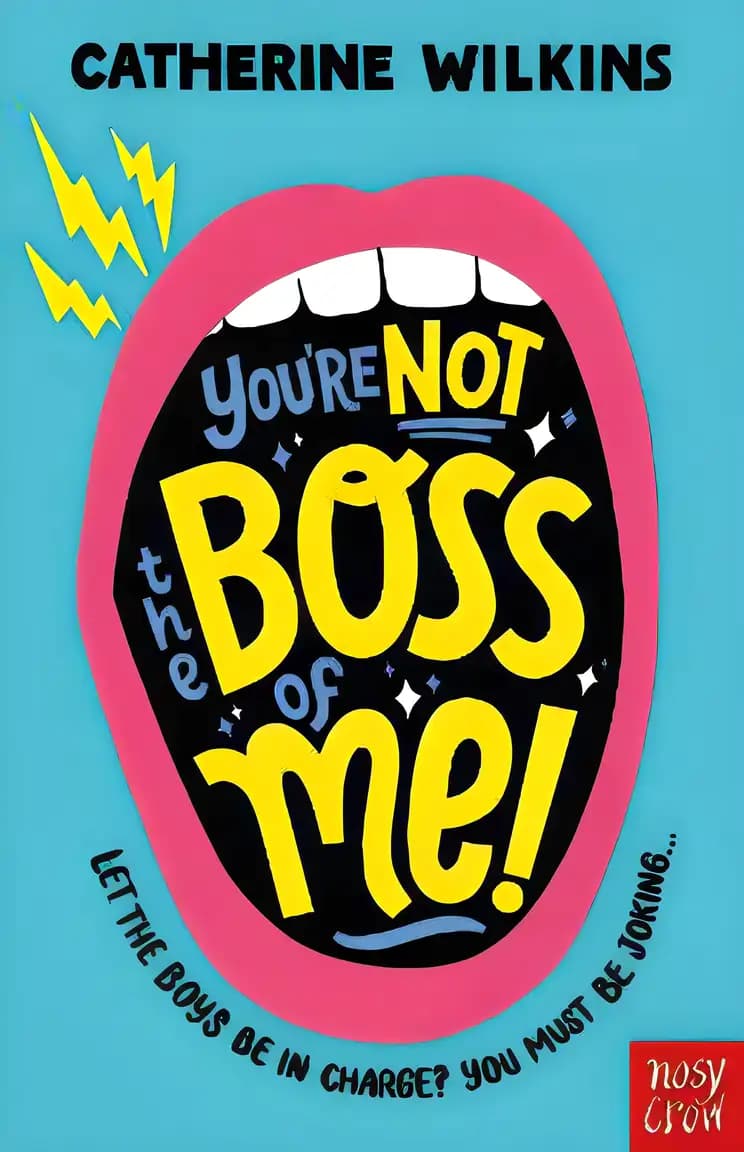
You're Not the Boss of Me!
Catherine Wilkins Series
on Goodreads (40)
What’s inside...
A laugh-out-loud story about fighting for your right to steal the show, from the much-loved author of the My Best Friend and Other Enemies series. Amy Miller is a very positive person and she is fully prepared to be the star of the Lower School Comedy Review. But evil genius Harry is put in charge and he decides that Amy isn’t allowed to perform or write sketches or do anything fun. Amy can’t understand what’s happening until her sister tells her: Harry is being sexist, and it’s up to Amy to fight back. Armed only with killer one-liners, Amy must go into battle to fight for her right to make people laugh. A brilliantly funny new story from Catherine Wilkins, stand-up comedian, podcaster and author of When Good Geeks Go Bad, The Weird Friends Fan Club and the My Best Friend and Other Enemies series.
Series reading
Non-Sequential
Age
9-12
Length
272 pages
Text complexity
Discussion points
How did the characters in the story feel when they were told they weren’t the boss? Can you relate to any of those feelings?
What are some ways the characters could have solved their problems without arguing?
Why do you think it's important to listen to others' opinions, especially when you disagree?
How do you think the story would change if the characters listened to each other from the beginning?
Can you think of a time when you had to work with someone else to solve a problem? What did you learn from that experience?
Tip: Role play these questions
Start the conversation by sharing your own experiences related to the theme of leadership and cooperation. Ask open-ended questions to encourage your child to express their thoughts and feelings. Validate their feelings and perspectives to promote a safe and open dialogue. Use examples from the book to highlight positive behavior like listening and collaboration. Encourage your child to think of ways they can apply the lessons from the book in their everyday interactions.
Key lessons
Example Lesson: Understanding emotions
Explanation: The book portrays various characters expressing their emotions openly, which helps children identify and understand different feelings.
Real-World Application: Children can learn to recognize their own emotions and express them in healthy ways, leading to better emotional regulation.
Example Lesson: Respecting authority
Explanation: Characters in the story learn to navigate their relationships with authority figures, understanding when to listen and when to speak up.
Real-World Application: This teaches children how to respect teachers, parents, and other figures of authority while also understanding the importance of self-expression.
Example Lesson: Conflict resolution
Explanation: Through the interactions among the characters, the book showcases practical ways to resolve conflicts without resorting to arguments or fights.
Real-World Application: Children can apply these peaceful conflict resolution techniques in school or while interacting with siblings and friends.
Example Lesson: Value of friendship
Explanation: The story emphasizes the importance and strength of friendships, even during disagreements or misunderstandings.
Real-World Application: This lesson helps children appreciate and nurture their friendships, understanding that disagreements are a normal part of any relationship.
Example Lesson: Importance of communication
Explanation: Characters learn that openly communicating their thoughts and feelings leads to better understanding and fewer conflicts.
Real-World Application: Children are encouraged to talk about their feelings and thoughts, which can lead to stronger relationships and a better sense of community.