
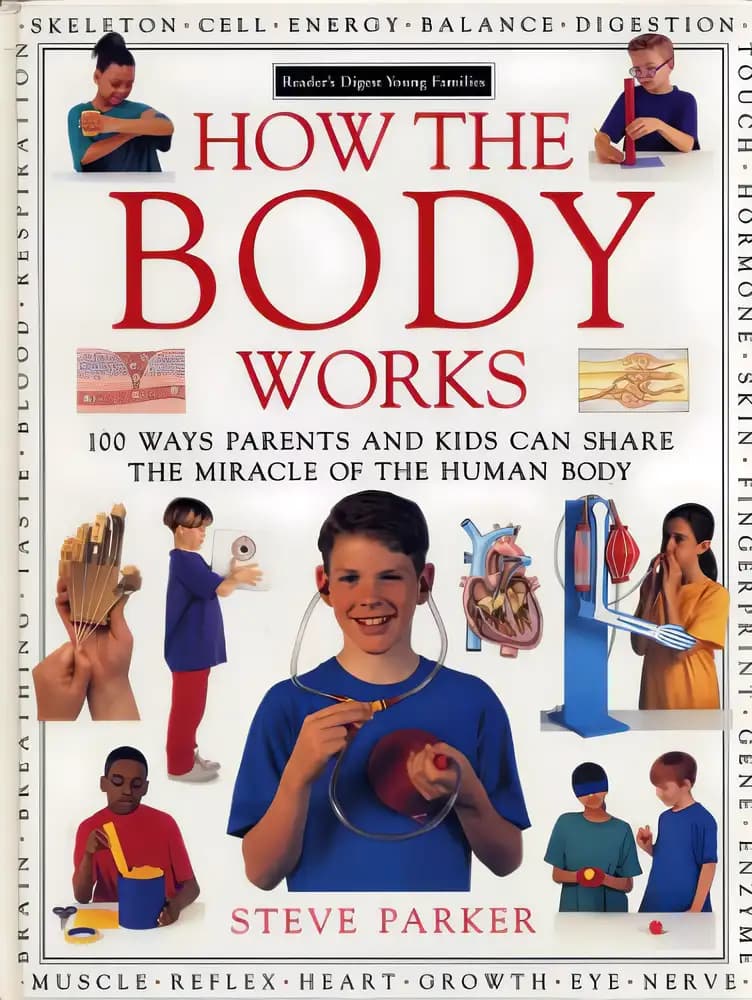
how the body works First edition by steve parker (1994) Hardcover
How it Works Series
on Goodreads (21)
What’s inside...
In 'How the Body Works,' Steve Parker provides a comprehensive guide to the human body's structure and functions. Published in 1994, this first edition offers an in-depth look at the complex systems that keep the body running, from the cellular level to the organization of major organs. Richly illustrated, the book is accessible to a wide audience, including students and laypeople interested in understanding human anatomy and physiology. It covers the skeletal, muscular, nervous, endocrine, circulatory, respiratory, digestive, and reproductive systems, as well as the body's defenses against disease. Parker's work is celebrated for its clarity and educational value, making it a valuable resource for anyone seeking to understand how our bodies function.
Series reading
Non-Sequential
Age
8-12
Length
48 pages
Text complexity
Discussion points
What is your favorite part of the human body and why?
How do you think eating healthy foods helps your body?
Can you name some of the ways our bodies protect us from getting sick?
Why do you think it's important for us to learn about how our bodies work?
If you could ask your body a question, what would it be?
Tip: Role play these questions
Encourage your child to relate the information in the book to their own body, asking how they feel when they're healthy versus when they're sick.
Utilize the illustrations in the book to point out different body parts and their functions, making it a visual and interactive experience.
Ask your child to share what they've learned with another family member, fostering communication and reinforcing their understanding.
Connect the dots between the book’s content and everyday activities like eating, playing, or sleeping to make the information more relatable.
Praise your child’s curiosity and provide positive reinforcement whenever they ask questions or make relevant observations during the discussion.
Key lessons
Example Lesson: Curiosity and learning about the human body
Explanation: The book dives into the complexities of the human body, encouraging children to explore and understand how their own bodies work.
Real-World Application: This knowledge can foster a sense of curiosity and respect for their bodies, promoting healthy habits and a lifelong interest in science.
Example Lesson: Understanding and empathy for others
Explanation: By learning how bodies function differently, children can develop empathy towards people with physical differences or disabilities.
Real-World Application: This understanding can lead to more inclusive behavior and attitudes towards classmates and people they meet who may have different physical capabilities.
Example Lesson: Importance of self-care and health
Explanation: The book educates on various body functions and systems, highlighting the importance of taking care of one’s health through good nutrition, exercise, and hygiene.
Real-World Application: Kids can apply this by adopting healthier routines and being mindful of the ways their choices affect their bodies.
Example Lesson: Critical thinking and problem solving
Explanation: Through detailed explanations and engaging diagrams, children learn to analyze and understand complex information about the human body.
Real-World Application: This skill can be transferred to school subjects, fostering better academic performance and problem-solving skills.
Example Lesson: Appreciation for medical science
Explanation: As children learn about various medical discoveries and the functions of the human body, they gain an appreciation for the field of medicine and its contributions.
Real-World Application: This may inspire future interests or careers in healthcare, science, or related fields.