
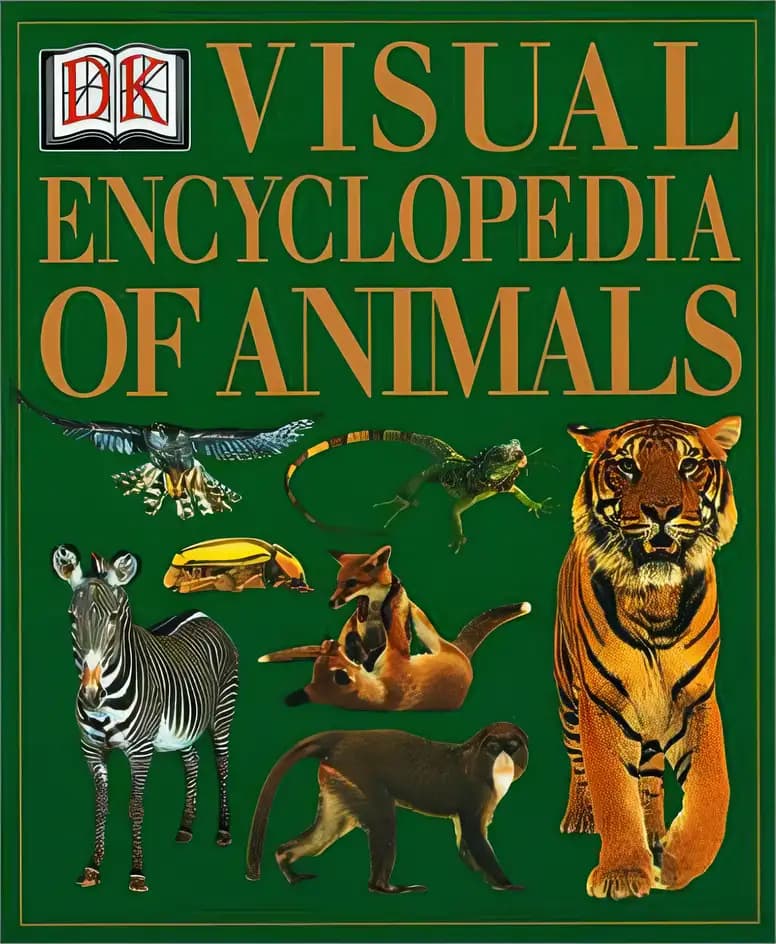
Visual Encyclopedia of Animals
on Goodreads (15)
What’s inside...
Shows you what others only tell you. An invaluable family reference book, thematically organized into seven sections, and packed with facts, figures, and quotable statistics. An amazing wealth of information about the animal kingdom, from insects, fish, and amphibians to reptiles, birds, and mammals. Over 1,000 full-color photographs, diagrams, cutaway artworks, and detailed instructions.
Age
12-13
Length
512 pages
Text complexity
Discussion points
What are some unique characteristics of your favorite animal in the book, and why do you think they have those traits?
If you could be any animal from this encyclopedia for a day, which one would you choose and what would your day look like?
How do you think animals in colder regions survive their environment compared to those in hotter areas?
What are some ways animals communicate with each other that you find interesting?
Tip: Role play these questions
Encourage your child to relate the book content to their own life by asking how they would feel and behave if they were a particular animal.
Promote empathy by discussing the challenges different animals face in their environments and how they overcome them.
Use the illustrations in the book to help your child focus and cultivate a deeper understanding and appreciation of the diversity in animal life.
Talk about the importance of animal conservation and what actions humans can take to help preserve animal habitats.
Key lessons
Example Lesson: Respect for biodiversity
Explanation: The 'Visual Encyclopedia of Animals' details a vast array of animal species, showing the unique traits and habitats of each. This variety encompasses a deeper respect for nature's complexity.
Real-World Application: Children learn the importance of conservation and respecting all forms of life, leading to more environmentally conscious behaviors like recycling and supporting wildlife protection initiatives.
Example Lesson: Understanding ecosystems
Explanation: Each section of the book explains how different animals play specific roles within their ecosystems, highlighting the balance of natural environments.
Real-World Application: Kids grasp the concept of interdependence among organisms, which can be applied in understanding human impacts on the environment and the importance of sustainable living.
Example Lesson: Importance of scientific curiosity
Explanation: Through engaging facts and visuals about animals, the book fosters a curiosity about biology and science.
Real-World Application: This drives children to explore other scientific areas, participate in science-related activities, and possibly pursue science education and careers.
Example Lesson: Empathy towards animals
Explanation: By showcasing the lives and challenges animals face, the book encourages readers to empathize with these creatures.
Real-World Application: Children can translate this empathy into actions such as being kind to pets and wildlife, and understanding the needs of animals in their care.